The Learning Lab Review

The term of 13 weeks at The Learning Lab (TLL) has come to an end and there is so much to say about our experience there, but I’ll try my best to be concise.

In my previous blog post about TLL, I shared photos of the various cool features of some of TLL’s eight centres located conveniently around Singapore and our initial review and thoughts about TLL (if you’ve not read the post, please hop over to take a look). For a curriculum overview, please read this post.

I am very fortunate to have had the opportunity to sit in in one of the Math and English classes during the term for awhile to observe how lessons are usually conducted, so I’ll share some of my thoughts about the lessons as well as the overall experience at TLL.

When we entered my boy’s classroom on the day of observation, we saw some items laid out on the table:
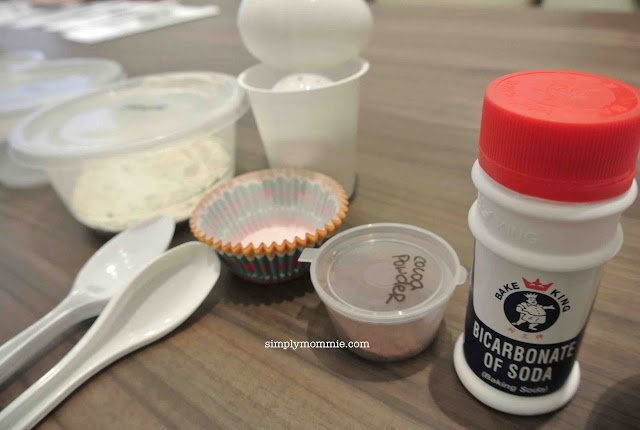
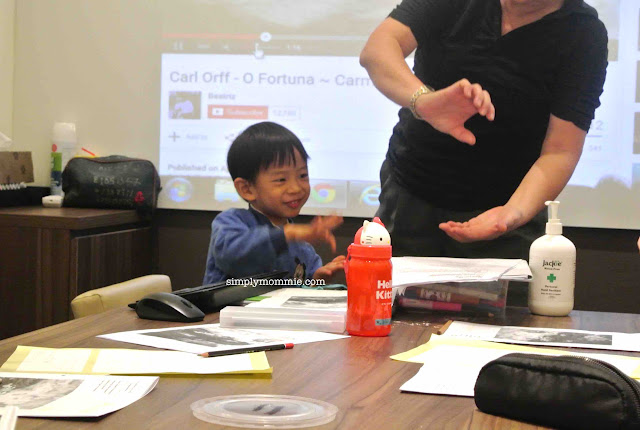
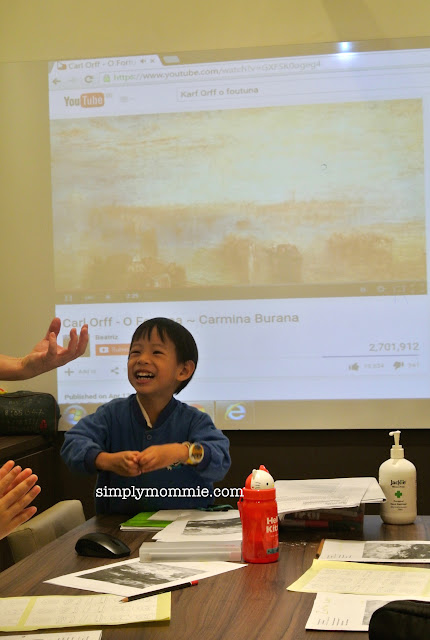
It definitely was a fun lesson as you’d expect. The kids got to taste, touch and smell ingredients such as cocoa powder, salt, sugar, butter; used descriptive words like smooth/rough, sweet/salty/bitter; pretended to go through the processes of baking a cake; and most significant of all (at least to the children) was when they got to eat the cake (the teacher had bought earlier that day).

Before the start of the lesson, the teacher had already checked with all the parents regarding food sensitivity.

Someone loved the butter and sugar, and even the slightly bitter cocoa powder!
The Learning Lab review

He loved the cake so much that his teacher got me to bring back the rest of the slice for his tea break!

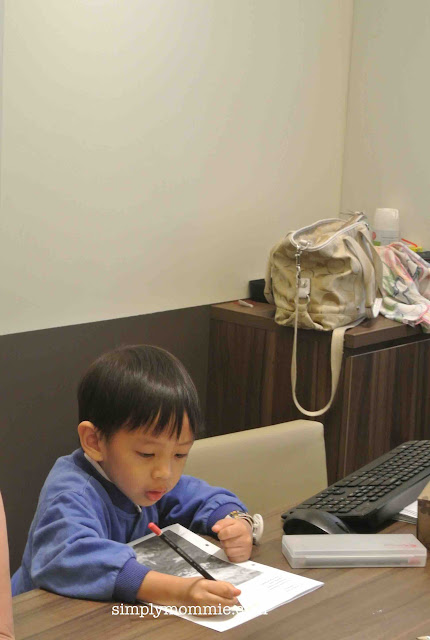
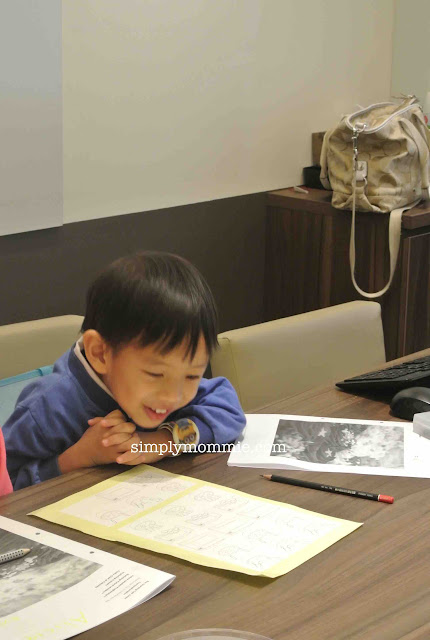
I’ve never been in a lesson with him where I’m not the teacher (because we homeschool) and it was so refreshing to just focus on watching his curiosity unfold, his enthusiasm abound and listening to his laughter without conducting the lesson. Indeed, I think not many parents have actually watched their children in classes and I’m indeed blessed to have the opportunity.

That was the hands-on part of the lesson. Other parts involved some writing where the kids would attempt comprehension questions (choose from two options with pictures) after the teacher has gone through the passage, learn sight words and word families.
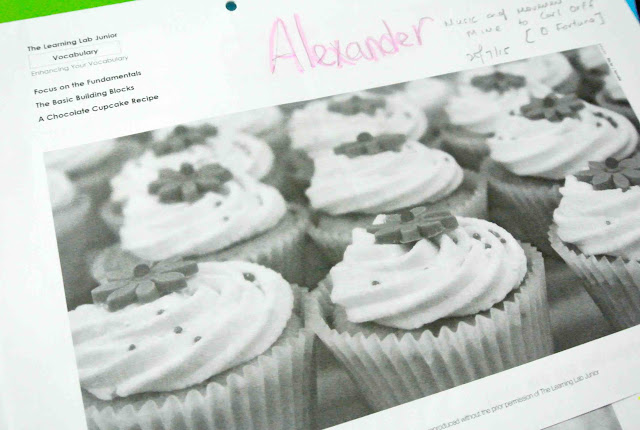
TLL has a 30-people strong curriculum team who refreshes the learning materials weekly. The week before that, they also had a more interesting session where they learned about Mexico and got to eat tortilla chips and salsa (which according to the teacher, my boy ate the most even though he found the salsa to be spicy). The National Day week saw them going through related materials as well and they all got to have a Singapore flag tattoo which they were so eager to show off at the end of the lesson.

I have many more photos of my boy’s (N2 English) class observation than my girl’s (Primary 1 Math) class simply because of the nature of the lessons for the age groups. Nursery level classes naturally tend to be more exciting and hands-on, and even so, I do find that TLL does require the students to be more focused and able to handle more seat work. As mentioned in my previous blog post, the curriculum at TLL though designed to follow MOE requirements closely, is pitched 20-30% higher so the students have an edge over others.

My girl’s Primary One Math class was definitely more academic in nature, which was totally expected since at that level, the focus is on honing exam skills and getting the students to understand Math concepts.

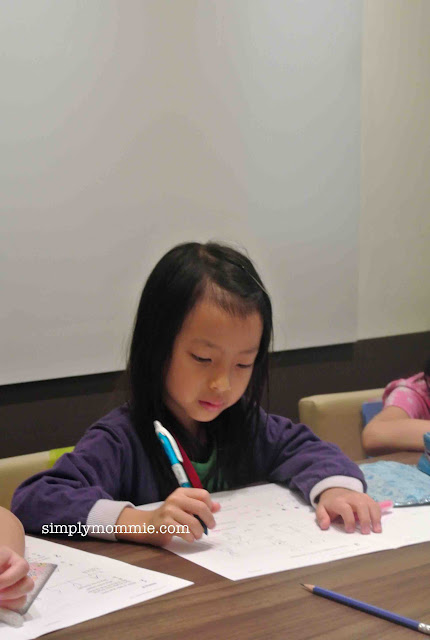
For the Math class, I found the teacher to be very organised and systematic. They started the class with housekeeping matters where the students all filed their marked worksheets in the correct sections. The teacher also played simple games with the students so the students could distinguish between the concepts of long vs. tall. To help the students understand length of curved/winding lines (as opposed to straight ones), the teacher also used concrete objects. There was also constant revision of concepts and exam skills taught in the course of attempting questions and the students all took turns to chip in with their answers and were not afraid to ask questions.

As the lesson I observed was approaching the test week in primary schools, I’d say the lesson was definitely gearing the students up for their test by revising earlier topics covered in Term 3. The teacher also reminded the students of the exam skills that had been taught previously when she observed any one of the students not applying the knowledge when attempting the questions. I like that answers are not fed to students and they are given time to work through the questions one at a time, individually first, then checking and explaining how they derived the answers as a class.
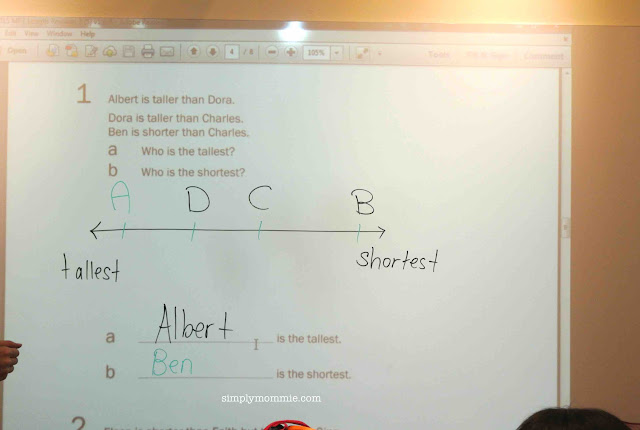
After a term at TLL (Westgate), we were encouraged to sign up for another term for my girl. I think at the end of the day, for parents to be willing to spend the time and money on enrichment for children, the most important thing is that the enrichment has to be effective, especially when you are paying good money for it.

For my girl, my hubby and I have noticed how much more positive she is now towards Math and attempting challenging questions. It’s also something that her TLL teacher commented on in the informal progress report she gave me at the end of the term. In her words, my girl “started off with apprehension in her mathematic ability. She would hardly attempt questions on her own and would require me to look over her shoulder as she did her work … Now, she takes the initiative to attempt questions on her own, even if she is unsure of the correct answer.”

Indeed, she used to give up immediately when she felt that the question was too challenging but now I notice that she really tries to apply the exam skills she learned at TLL. Her speed of mental calculations has also improved – when she started at TLL, she was still using her fingers to count when doing addition within 20.

Overall, we find that the lessons at TLL have been effective in boosting her self-confidence and improving her attitude towards Math. I also like that we don’t have to check through her TLL homework to ensure that she got every question right as the teacher expects the students to complete the homework without assistance so she knows which learning gaps to address. There is also constant revision of various topics as TLL assignments done in class and for homework span a wide range of topics, not just concentrating on the new one introduced. I will share more about the Math classes. [Update: Read my curriculum overview of P1 Math]

As for my boy, I’d say that his attitude towards practising writing has improved in the course of the term. Before we started lessons at TLL, he already knew how to write his alphabets but he was not very keen on writing and there was plenty of room for improvement in his handwriting. When his TLL teacher first passed me the Reading Log, I was quite flabbergasted that there was actual homework to be done but eventually I realised that not only did the whole assignment provide the kids with good readers to learn to enjoy reading, it actually encouraged them to write purposefully and in my boy’s case, he got used to doing some writing and copying every week. For that, we are actually very pleased with him and how he adapted quickly, though he admittedly took a little longer to deal with separation anxiety in the first few sessions at TLL.

In the first week, I thought he wasn’t up to writing so I did the writing for the titles. In the second week, I let him take ownership of his work:
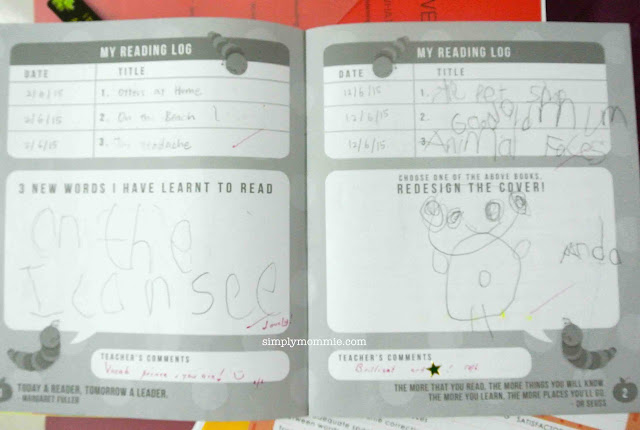
This is the page for his last assignment at the end of 13 weeks. It is so much neater and he takes pride in writing on the line!
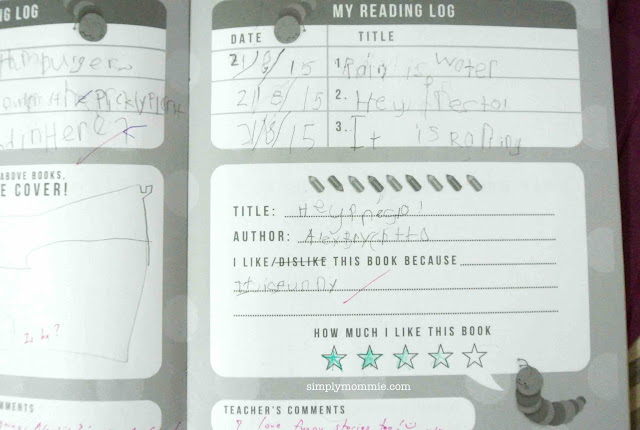
Conscientiously doing his last TLL assignment

I personally find that the N2 English class is pitched at really quite a high level as letter sounds are covered in N1, so N2 focuses on word families and letter sounds are not re-visited for new students who join in N2. There’s a gap there and TLL tries to fill it by providing new students who were not with them in N1 with an A-Z book which is issued in the term that they join.
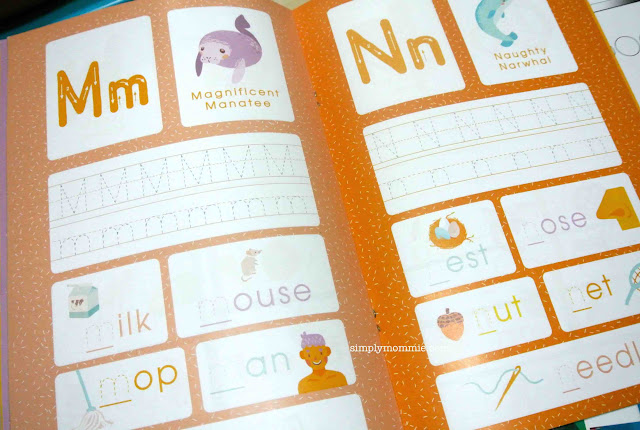
Even though my little boy enjoyed the lessons at TLL, unfortunately being a single-income family, we have only enough resources to let my girl continue with her lessons. It’s a matter of who-needs-what-more for now. Meanwhile, we will definitely continue to encourage our boy to continue with what TLL has started with him.

For more information about the locations and programmes offered at The Learning Lab:

Website: http://www.thelearninglab.com.sg

Facebook: https://www.facebook.com/TheLearningLabSingapore

Disclosure: This is an advertorial. All opinions expressed are 100% mine.

Posted in Advertorials, Places & Events, Reviews, Tuition | 3 Comments

Junior Explorers Review

I was looking for a subscription box related to learning about the world in the past month and I was so close to signing up for one (I already had it on the payment page!) when Junior Explorers offered me their subscription box for review. I like to think that this is God’s way of providing for our family, and this is the direction that he has pointed me in terms of home-teaching. Needless to say, I put the other subscription box on hold for now till the Junior Explorers subscription ends.

Junior Explorers is a fun, educational subscription box for kids 6 to 11 that allows them to explore the natural world. They will learn about wildlife and ecosystems, as well as the importance of protecting them.

Each month, Junior Explorers sends your child on a new “mission”, which is comprised of both physical materials as well as exclusive online content. The physical materials include collectibles, activities, animal facts, and more. A password to access the online portion of their mission is also printed on the envelope of the Mission Kit. This will allow them to play games, solve mysteries, and even earn rewards. There is a “box” (which is supposed to be a trunk which the little explorers can decorate with provided stickers) that is included only in the first month. Subsequently, Mission Kits come in envelopes.

It’s really early in our journey with Junior Explorers and I’m excited to show you what we’ve received thus far to let you in on what Junior Explorers is about. Just before the September holidays, we received the Welcome Kit and the first Mission Kit – perfect timing! Technically, you should receive them a month apart, but for the purposes of the review, I received both kits together so I could give you a quick run-through of what this new subscription box is all about!

The Welcome Kit consists of a box (trunk) to store subsequent materials, a water bottle (because explorers need to stay hydrated all the time!), and a welcome pack of materials.

Included in the welcome pack is a checklist, a set of stickers to decorate the trunk, a wristband, a badge, a field guide (with some basic information about the biomes, types of animals etc.), a set of tattoos, a map and a name tag.

junior explorers review

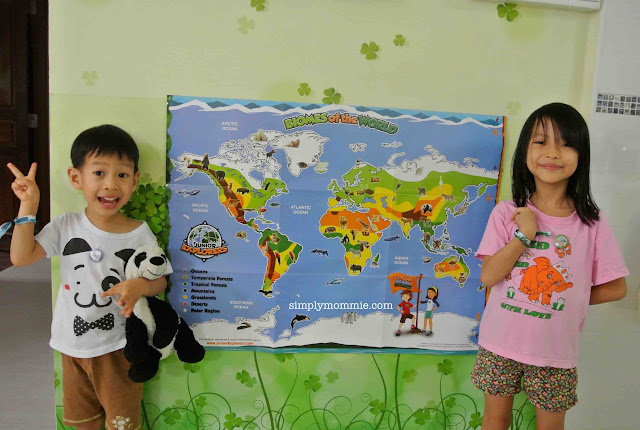
Both with a wristband and badge. Every mission comes with a wristband and a badge (including the welcome kit). And that’s the map which we will use for all the future missions!

First thing my girl wanted to do was to decorate the trunk. Of course, meanwhile she sent me on a mission to wash her new water bottle 😀

Decorated her trunk and ready for more!

They were thrilled to have the tattoos that very night after their baths:

junior explorers review

There’s a whole set of tattoos given so we had tattoos for a few days. The tattoos come off rather easily though – so you don’t really need to use baby oil for removal.

Our first mission is to explore the Arctic and help two polar bear cubs find their mother. Every mission kit comes with a letter for the junior explorers. In our Arctic kit, we received four postcards for sharing with friends (each postcard has brief information about the picture), two mini arctic animals, animal cards, tattoos, a wristband, a badge, an information sheet, an activity booklet (which is more like an activity sheet) and a set of stickers to decorate the trunk. On the envelope, there’s a mission code which junior explorers key in when they go online to complete their mission.

junior explorers review

This is how the checklist looks like

Geared up for the mission, complete with her Junior Explorers card and the mini arctic animals!!

Reading the letter about her mission

Decorating her trunk with the new stickers

We went through the animal cards provided as well as the bite-sized info on the postcards, and went online to find out more information about the new things we learned from the cards.

We read up about lemmings, the snow fox’s colours that change with the seasons, watched a video about aurora and listened to the sounds made by the Beluga Whale (who are known as “sea canaries”). With this extra knowledge, when we went online and logged in for the mission, she showed the ability to connect with what we had watched/read earlier to the mission.

Top: watching a video about Dancing Lights; Bottom left: watching a video about snow foxes Bottom right: watching a video to listen to the Beluga Whale

There’s also an information sheet which we read in between while waiting for the mission to load. It took quite long each time, some longer than others, but we made use of the time in between to read the information sheet and work on the activity booklet.

Upon logging in, you can choose your avatar. Because there’s a mission, I’d say everything flowed very logically and systematically. It’s really quite impressive, and we spent about an hour and a half on the mission (including the reading up and watching videos). Considering she’s 7, being able to concentrate on a topic for such a length of time says something about the product.

There are interesting games and even packing for the expedition (choosing appropriate gear) is played like a game and for every objective completed, the junior explorers are given points. There’s a Flappy bird game (snowy owl eating lemmings) to reinforce what snowy owls normally eat, a kayaking game where explorers have to navigate the kayak without crashing into the ice floes, life cycle puzzle games, helping the ringed seal reach its breathing hole in the ice (by moving blocks of ice in a puzzle). When learning about animals (animals are explored one at a time), it is interactive – for instance, you have to click on different parts of the polar bear to learn the body parts and their functions. There’s also a Certificate of Accomplishment at the end where your child gets to type in his/her name.

One of the things that makes this subscription box stand out is this: “Mission Giveback”. As your child earns points online, they’re converted to dollars and at the end of every mission, the little explorer gets to choose which nonprofit organisations (such as World Wildlife Fund and the Nature Conservancy) receive the donation. At the end of our Arctic mission, we had 100 credits to give and we decided to split it equally between the two organisations.


What I really like about the subscription box:

  • The online mission is excellent in terms of the crafting of the content. Everything flows logically, information is provided systematically and the games are engaging and tap on the interests of the target age group. You can go back and play any of the games at the end of the mission without having to go through the entire process.
  • The kids are exposed to the biomes of the world and explore these one at a time. In each biome, they learn not only about the animals, the habitats that categorise the biome, they also learn more about the world – the continents, the oceans, geographical knowledge.
  • Subscription covers everything that you need so there’s actually no need to look for extra information if you don’t want to. Extras to keep the kid engaged include tattoos, stickers, the collectible wristband and badge are also helpful to keep the hype up so interest is sustained through the month (till the next package arrives).

What I think can be improved:

  • It’d be good if the online missions could take a shorter time to load.
  • Some of the games had a time limit which I find rather short for younger kids in the target age group. I had to help my girl with the controls as she isn’t so tech-savvy to operate the laptop that fast.
  • The volume of the characters speaking during the online mission swings to extremes. Some characters are really loud, while some are soft. I had to constantly adjust the volume.

Checking out the Arctic Circle on the globe and which areas of the earth fall inside that circle.

For extension activities, I set up a super easy sensory bin for small world play using our Arctic Toob, cotton balls and white pompoms (check out our sensory bins on the blog). I’ve grown to be a little too afraid of mess so I didn’t get the salt out (like when I did up the Penguins small world play). I actually also have iridescent snow sprinkles which would have looked gorgeous – I took it out then kept it back into the storeroom. Till I gather enough courage for the mess, I think this box will do fine. Bonus – it can be played in the comfort of home too since it’s mess-free.

I also realised that we own a really neat book which would fit in nicely with our Junior Explorers subscription box so we use that for extra reading, but honestly, the information the box provides is enough. I just like to do a little extra, as always.

For more information about Junior Explorers and pricing, please check out their website.

I will continue to share the Mission Kits in the next few months. Keep a lookout for the social media posts detailing each kit!

Here’s the link to the review after several months!

Disclosure: We were provided with subscription for purposes of the review. No other compensation was received. All opinions are mine.

~~~~~~~~~~~~

Lovely and constructive comments are welcomed. Do hop over to my Facebook page where I connect with my readers and I would love to have you following me on Pinterest, Twitter and Instagram too 🙂

Posted in Homeschooling, Reviews, Subscription box, Teaching Science, Toys and educational products | 2 Comments