Fish porridge recipe

fish porridge recipe

Since we got married, I’d never cooked fish porridge for my hubby until this year. You see, we are generally gluttons, so as you would expect, fish porridge won’t fill our stomachs up much. In fact, I’d only cooked fish porridge once – for myself – when I was down with HFMD together with my then 4-month-old daughter when he went for his cousin’s wedding dinner. I know, it’s odd that I remember such things in detail, but if you were in such pain, I think you’d remember quite a bit.

Alright so somehow this year, our appetite shrunk a little, at least on some days. And lo and behold, one day the hubby asked if I would cook him fish porridge. I asked him if he was ill because in all these years, he’d never asked for fish porridge and almost always had something to say when his mum cooked it. He declared himself to be well and just wanted to start eating ‘light’. Anyway, to cut the long story short, we started to fall in love with the simplicity of fish porridge and my family kinda survived on it for the two weeks I was down with a very bad strain of flu and cough a few months back. And now we have it at least once, if not twice, a week. I’m secretly glad because this is really easy to cook. 😛

fish porridge recipe

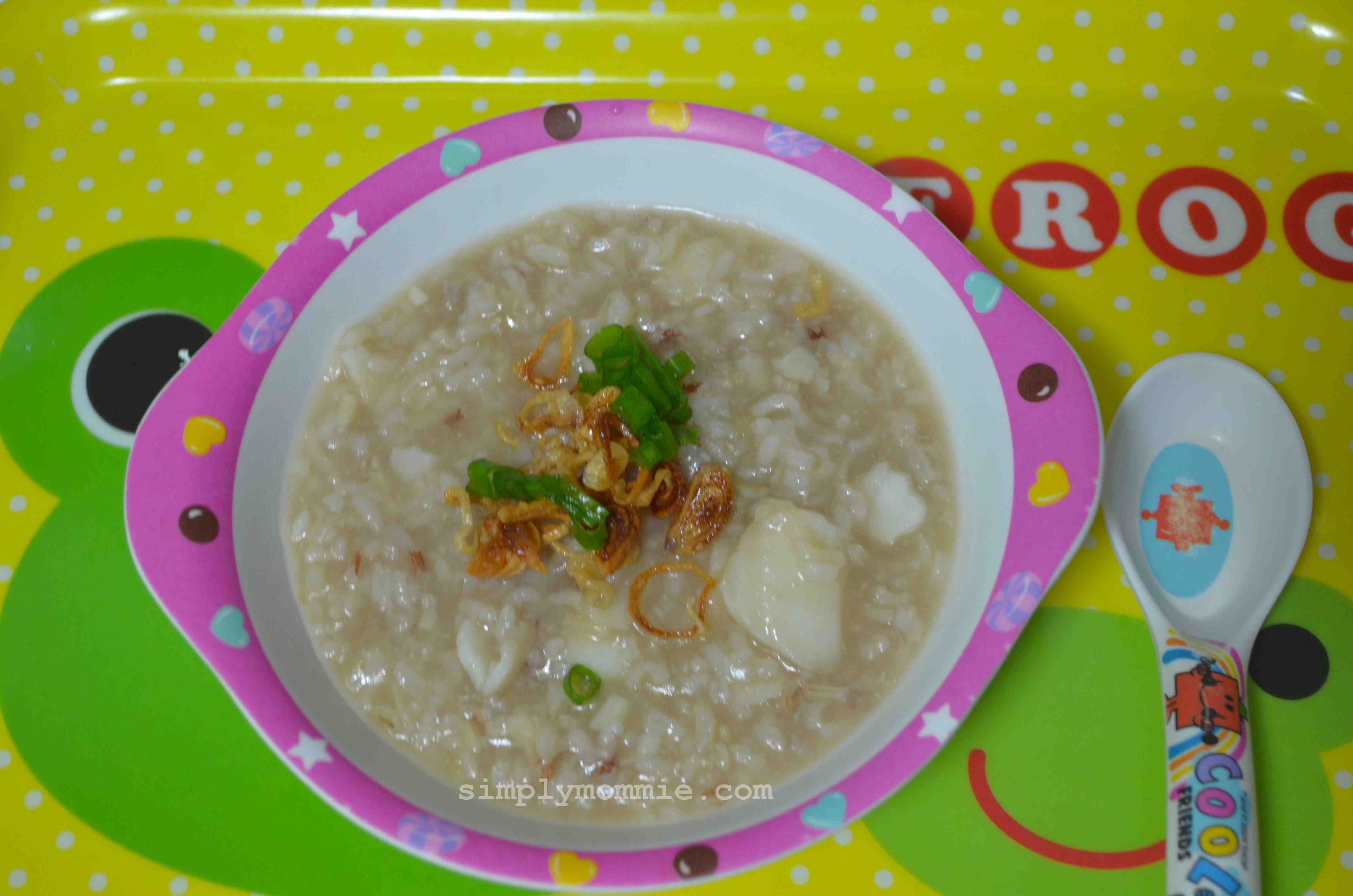
For my fish porridge recipe, it’s done up differently from other recipes that I’ve come across. This is the way my grandma used to cook it and it was passed down to my mum and now to me.

Fish porridge recipe
fish porridge recipe


4.0 from 2 reviews
Fish porridge recipe
Author: 
Recipe type: Mains
Cuisine: Chinese
Serves: 3-4
 
An easy and light tasting meal that is extremely nutritious.
Ingredients
  • 300g cod fillet* (see cooking note 1), cubed
  • 160g mixed grain rice
  • 1L - 1.2L water (or fill your rice cooker to the 1 cup mark for Congee)
  • 2-3 stalks of scallions, chop off the roots and cut into segments of about 5cm in length. Slice half of a stalk of scallion (selecting only the green portion for garnishing).
  • 1 thumb-sized ginger, sliced
  • 5 shallots, sliced thinly
  • 2-3 cloves garlic, minced very finely
  • 1 heaping teaspoon of preserved radish, rinsed thoroughly to remove dirt
  • fish sauce to taste
  • 1 teaspoon olive oil for frying
  • oil enough to cover sliced shallots (slightly less is fine too)
For marinating the cod:
  • 1-2 tablespoons light soy sauce
  • a couple of dashes of ground white pepper
Instructions
  1. Set the rice grains to cook (it takes about an hour in my rice cooker and about 25min on the stove).
  2. Marinate the cod for at least half and hour. You can do this the night before cooking.
  3. Prepare the crispy shallots by placing the sliced shallots in a microwave-save bowl and covering at least half of the amount of shallots with oil. Cover with a microwave-safe wrap, leaving a little hole at the side so it doesn't overheat, put it in the microwave for 2.5 minutes. Add 10seconds more if the shallots are still not light brown (it will continue to cook in the hot oil so you don't need to wait till it's beautifully browned). Set aside the shallots* (see cooking note 2) when it's done.
  4. minutes before the porridge is done, heat a pan/ wok and add the ginger and scallions. Fry till fragrant.
  5. Add the minced garlic and fry till fragrant.
  6. Add the marinated cubed cod. Give the ingredients in the pan a mix then cover and cook for 3-5min. Remove the ginger and scallions.
  7. minutes before the porridge is done (my rice cooker will usually start its countdown), add in the preserved radish, cod* (cooking note 3) and garlic which you've just cooked. Add fish sauce to taste.
  8. Cover the rice cooker and let it finish the cooking process.
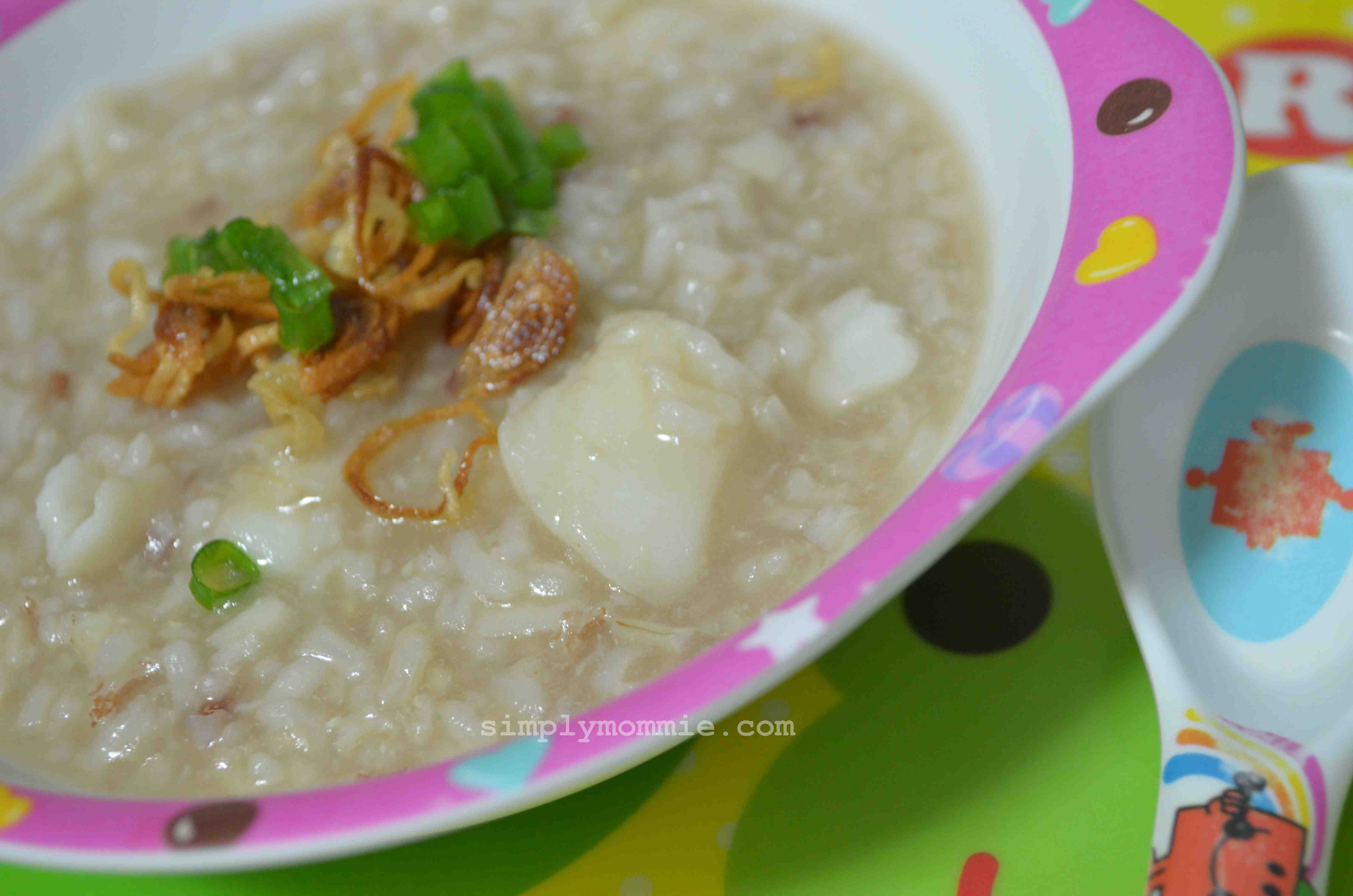
  9. Dish, garnish with crispy shallots* (cooking note 4) and scallion.
Notes
1. Using cod makes the porridge taste smoother. You can use threadfin or red snapper in place of cod - the porridge will still be sweet but it won't be as smooth. Instead of frying the threadfin or red snapper, steam them with ginger and scallions. Use only the flesh (discard skin and bones). In a separate sauce pan, fry the garlic in 1 teaspoon of oil. Add the fish and the garlic (together with the oil) into the porridge 10 minutes before the porridge is done.

2. I usually have a whole jar of crispy shallots stored in the oil it was cooked in so I just dish from that jar. You can use crispy shallots when cooking vegetables too so it makes sense to just prepare in bulk and use it for a week's cooking.

3. It doesn't matter if some of the cod still looks uncooked at this point. The heat of the porridge in the rice cooker will continue to cook the cod.


4. If you use threadfin or red snapper, you can add in 1 teaspoon of shallot oil together with the crispy shallots.

5. According to my grandma and mum, cooking the fish with ginger and scallions first before adding to the porridge removes the fishy smell and hence doesn't 'pollute' the taste of the porridge. This also ensures that ginger and scallions don't end up in the porridge which could be too strong-tasting, especially for young children who may not like the taste.


6. This recipe is for 2 adults and 2 young children.


Click the link for a complete list of one-dish meals (with thumbnails) on the blog. Or check out the Fish & Seafood section for more ideas.

Like porridge? Here’s a chicken congee recipe!

Other cod recipes which might be of interest:

Teriyaki cod Ritz crumbed cod Air-fried cod bites Cod potato balls

~~~~~~~~~~~~

If you like this post, please hop over to my Facebook page where I connect with my readers and I would love to have you following my newly set up social media accounts – Pinterest, Twitter and Instagram. 🙂

Posted in 1-dish meals, Chinese Food, Food for kids, Recipes, Recipes for the family, Sample toddler meals, Seafood | Tagged , | 9 Comments

5 activities to go with “Today I am…” by Mies van Hout

Collage

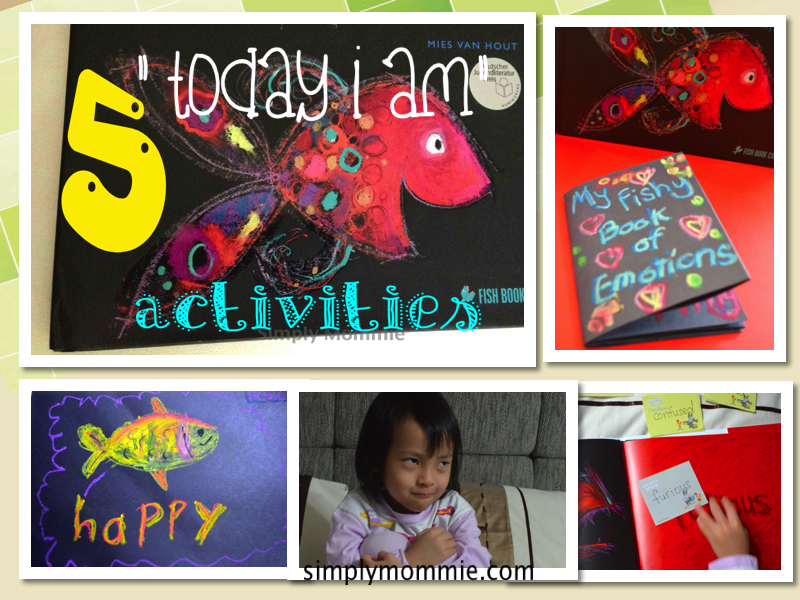
Last week I reviewed the book “Today I am…” by Mies van Hout and started a worldwide giveaway of the book (8 more days till the giveaway ends). This week, I’m sharing with you 5 activities we did to enhance the reading experience and also to ride on the book to explore more about emotions and extend the learning to other disciplines.

#1 Oil pastels on black paper

The very first activity that came to my mind the moment I held the book in my hands was to let my girl explore with oil pastels on black construction paper. I just had to let her experience creating the vibrant colours!

I started by asking her what she wanted to draw (I didn’t limit her to drawing fish), but she requested to draw a fish. I want to draw a happy fish. Can? 

Can’t say no to that so I got her to draw the outline first with a light colour (yellow) and slowly fill in the details with other colours.

oil pastels on black paper

I taught her how to blend the colours together and she continued to do the rest herself. We totally loved the end product and its now hanging proudly on my fridge!

For activities #2, #3 and #4, I simply wrote 12/20 words from the book onto pieces of paper –

Today I am by Mies van Hout

To tell the truth, I’d actually only planned 3 activities in all, but my girl came up with two more on her own and so we have a total of 5 activities to share! My initial plan was merely to get her to recognise the words and then play charades but she had other ideas when she saw the words on the slips of paper.

#2 Match the word

She decided that she’d look for the word in the book to match what she had in hand. This is particularly good for kids to focus on the word and the spelling.

Today I am by Mies van Hout

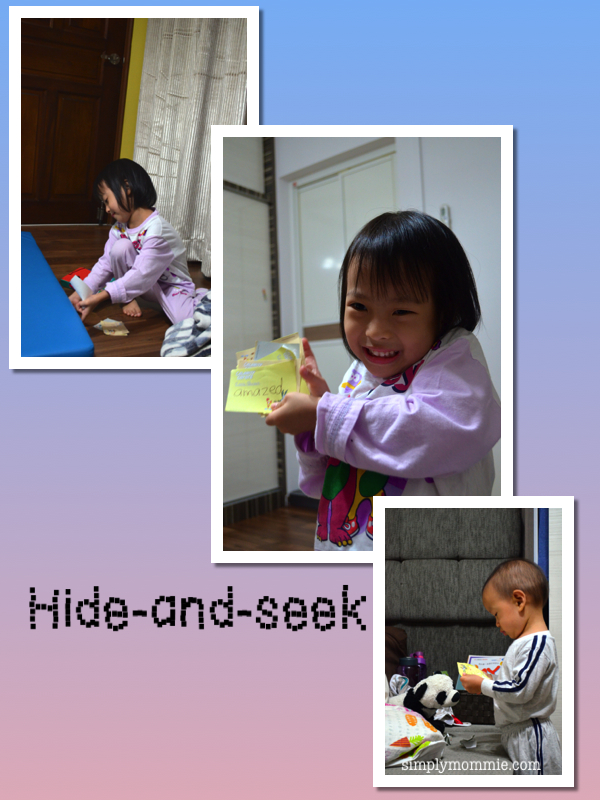
 #3  Play hide-and-seek…

…with the words, that is. I used to play this game with her when she was younger, especially for Chinese word recognition. I’d hide the words around a specific area in the house and she’d have to hunt for the words and read the words when she found them. Apparently after such a long time, she still remembers the game! This time, she decided to do both the hiding and seeking on her own. It’s really hilarious how forgetful she is because she actually forgot where she hid some of the words and asked me where they were. And so I enlisted her brother’s help to look for the words (not that he can read yet!).

Today I am by Mies van Hout

#4 Charades

Ok, and so this is the one that I planned. LOL. We had great fun with this one, as expected! She was supposed to act out the expression and we had to guess the word.

Today I am by Mies van Hout

Can you guess which words she’s trying to express?

#5 Writing a book about emotions

A couple of weeks ago, she wrote an 8-page mini-book about herself using A4 paper and got hooked on creating her own stories. Since she loved doodling on black paper with oil pastels so much and kept asking for more opportunities to work with that, I decided to let her make her book with black construction paper (the piece I used was slightly smaller than A3 size).

As usual, I let her decide on the focus of her book but I told her to bear in mind what she’d learnt from reading the book. She decided without much hesitation that she’d pick out her favourite emotions from the book and illustrate that and she wanted to stick to using fishes rather than a human face.

I helped her with the drafting of the title and she did the rest of the blending and drawing on her own. I helped with some of the fishes too when she got tired of illustrating and I’d say I’m really pleased with her work.

Today I am by Mies van Hout

If you want to learn how to make a 8-page book from a sheet of paper, you can view the video here –

I hope you give some of these activities a go when you get a copy of this book! “Today I am” will make its debut public appearance at the Rise & Shine Expo, 27-29 September 2013 at the Suntec Convention Centre so remember to grab a copy of the book then!

View our other literature-based learning posts if you’ve found this useful! 🙂

~~~~~~~~~~~~

If you like this post, please hop over to my Facebook page where I connect with my readers and I would love to have you following my newly set up social media accounts – Pinterest, Twitter and Instagram. 🙂

Posted in Art, Homeschooling, Literature-based learning, Teaching English | 1 Comment