Attractions at Science Centre Singapore | September 2016

Yesterday we spent a whole day at the Science Centre! In particular, we spent most of our time at Tinker Fest.

Tinker Fest

Tinker Fest, organised by Imagin8ors and Science Centre, connects children, parents, educators and makers in a week-long celebration of the Joy of learning through play, exploration and experimentation. The theme of the festival “Nurturing 21 Century Learners!” seeks to highlight the foundational capabilities that we need to build in children from an early age, to equip them to succeed in a fast changing, technology driven world.
science centre singapore september 2016

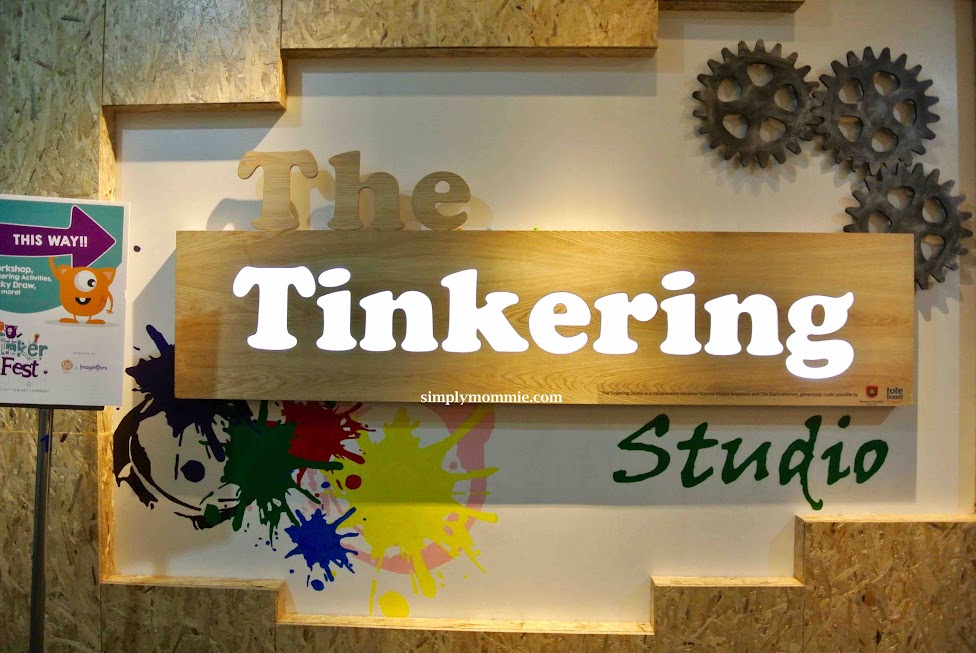
Parents and pre/primary school children (ages 3 upwards) can join the Tinker Fest for a wide range of all-day activities (walk-ins) and morning workshops (all fully registered) at the Tinkering Studio. The activities and workshops have been carefully designed to facilitate critical thinking, imagination & creativity, connect multiple disciplines like art and science, use technology purposefully, and build character traits.

Tinker Fest Workshops

There were workshops lined up from 5-9 Sep (Mon-Fri), and the one that we attended was on Thursday, Toys Transformed. Basically the aim of the workshop was to take apart old toys and transform them into new ones. It was near impossible for the creativity-challenged me, so I left it basically up to the kids to come up with something.

At the start of the workshop, the participants were asked to have some outdoor time first as a warm-up.
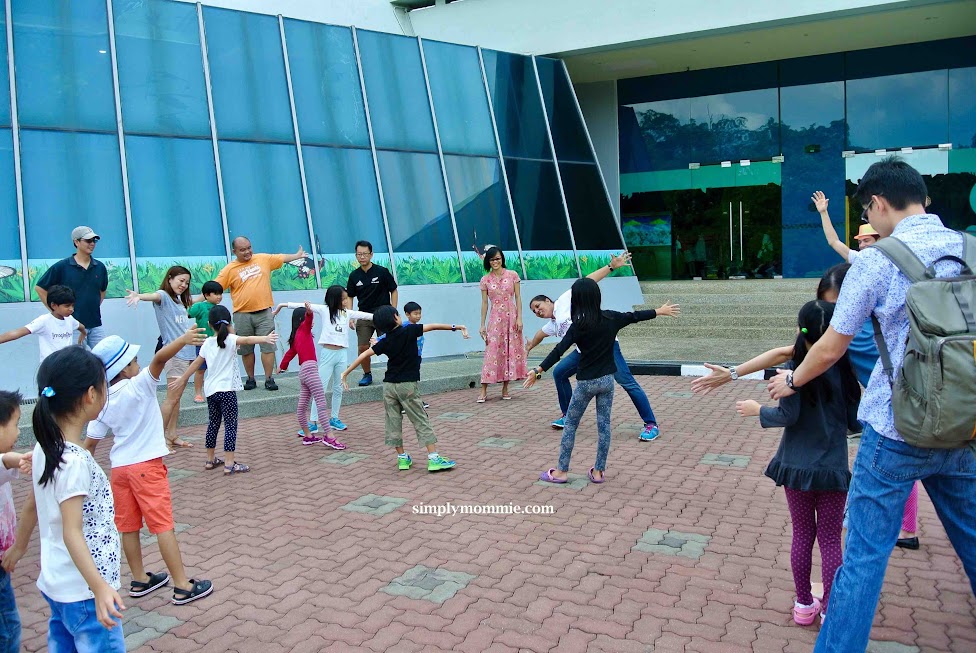
During the warm-up time the participants were asked to demonstrate what they had brought for the workshop. After that, we headed back in to start work.

The kids could work on the toys they had brought or add on to their stash with the ones provided.
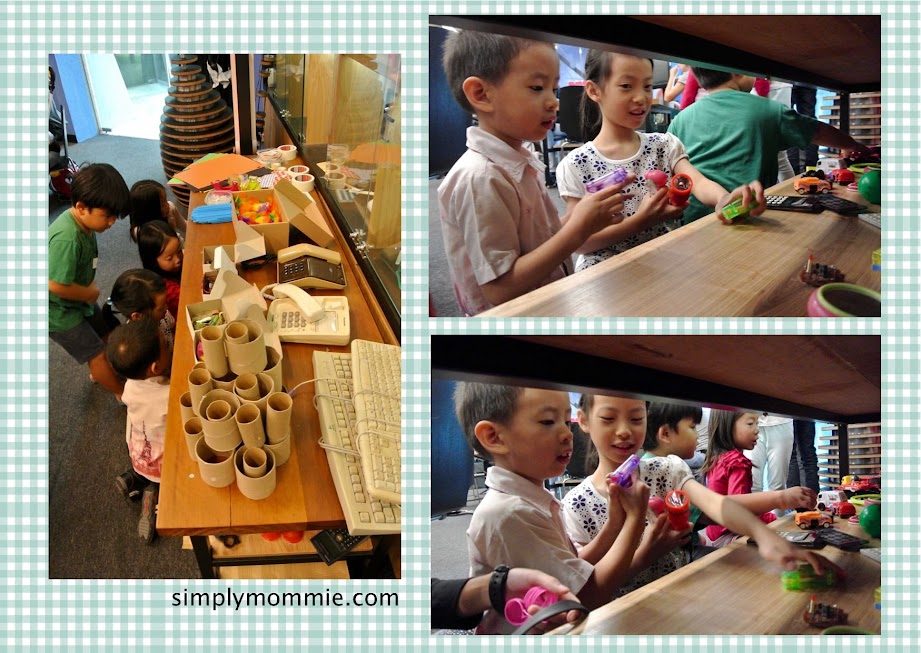
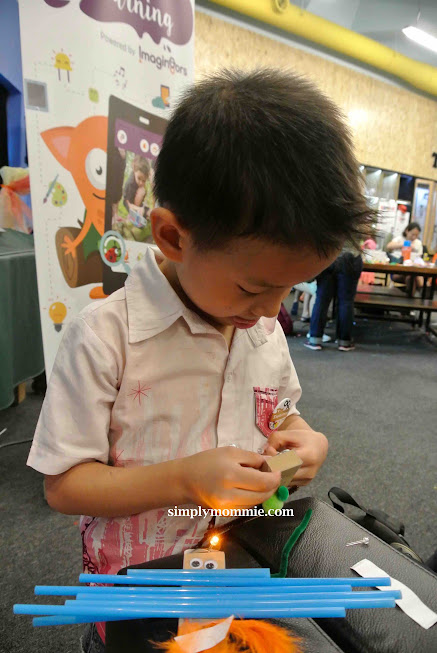
So it was time to start dismantling stuff and finding out what was inside!! To be honest, it was my very first time taking apart stuff and checking out what was inside.
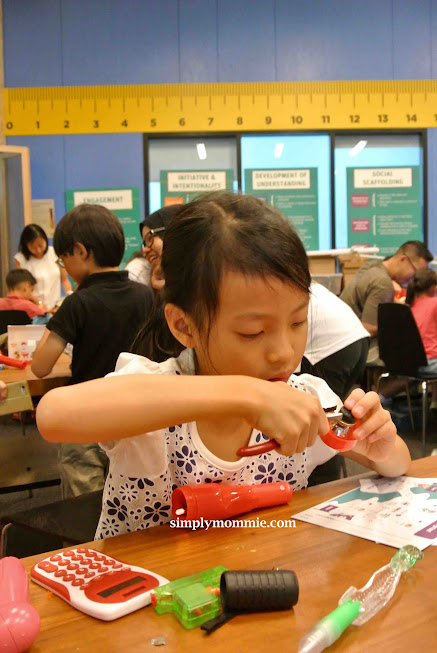
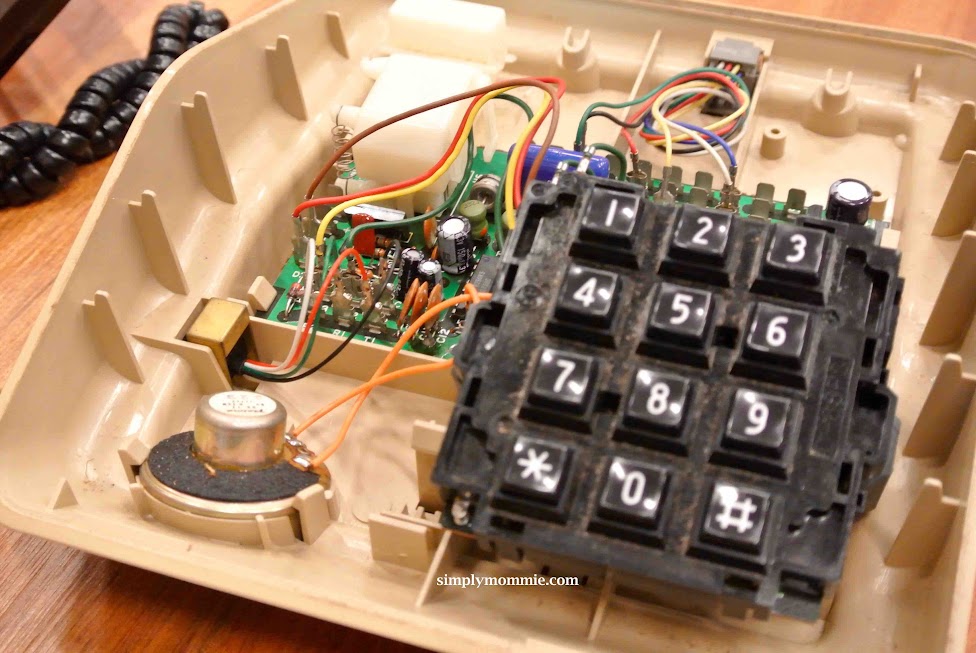
It’s the first time we allowed them to handle screwdrivers and pliers because the ones we have at home are pretty rusty. I think it was a really good experience! My boy concentrated on unscrewing everything and anything he could get his hands on for the whole session. My girl took things apart and one of the most interesting things she took apart was an ancient telephone 😛 OMG, it was the first time I saw what’s in a telephone – and a dated one too!

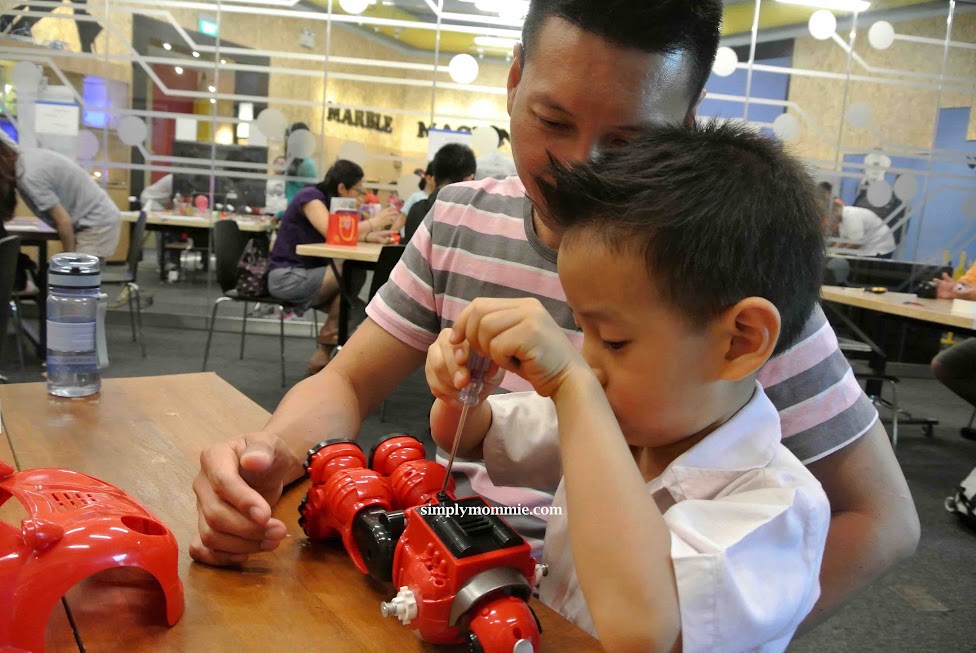
looking pleased with his half-dismantled robot

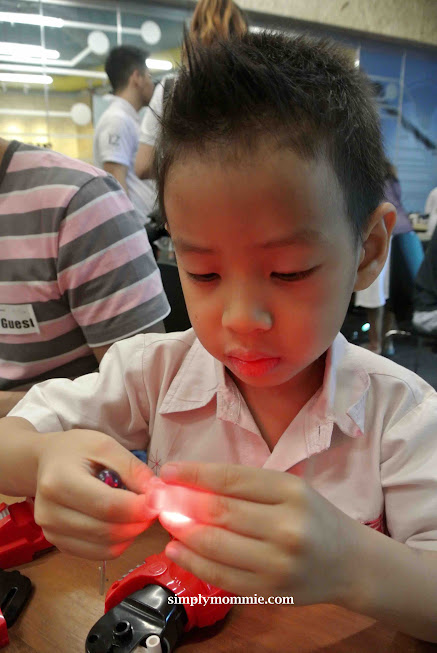
Besides dismantling, one of the other fun things they did was to play with bulbs, batteries and motors.
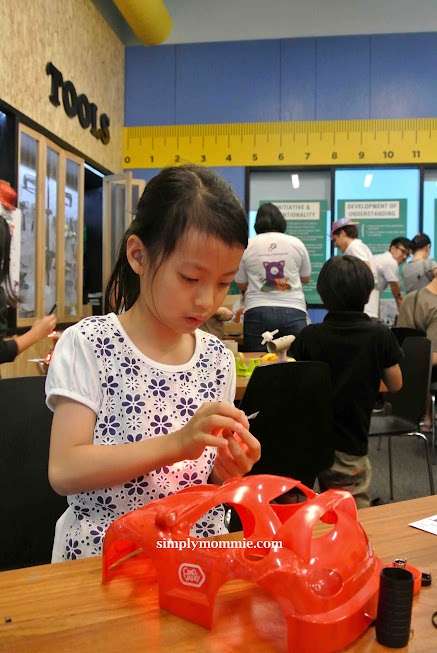
My girl eventually made a lighted car with propellers:
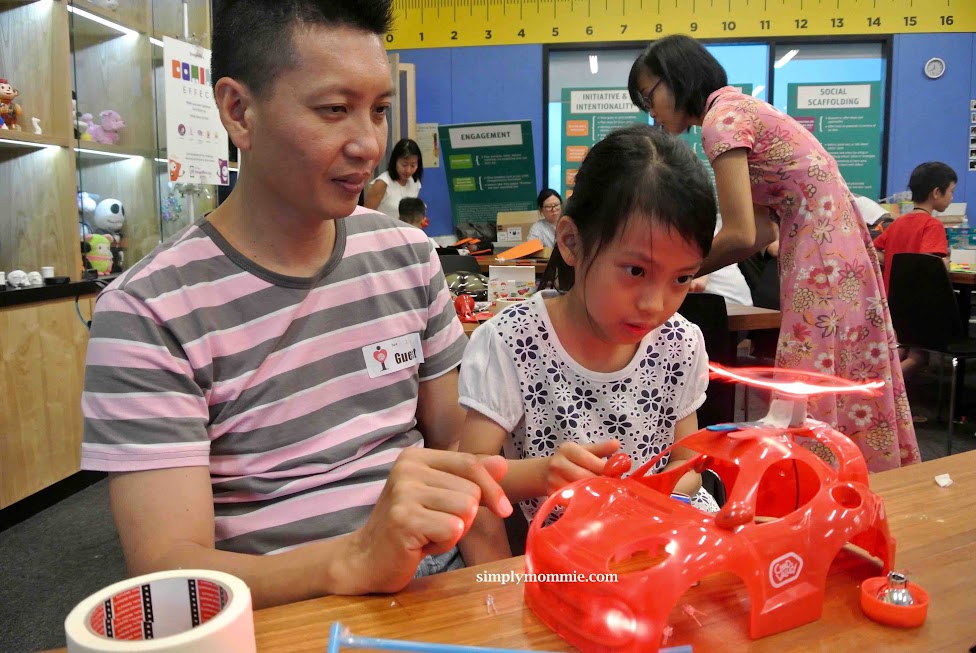
Yay! Got the propeller to work perfectly!

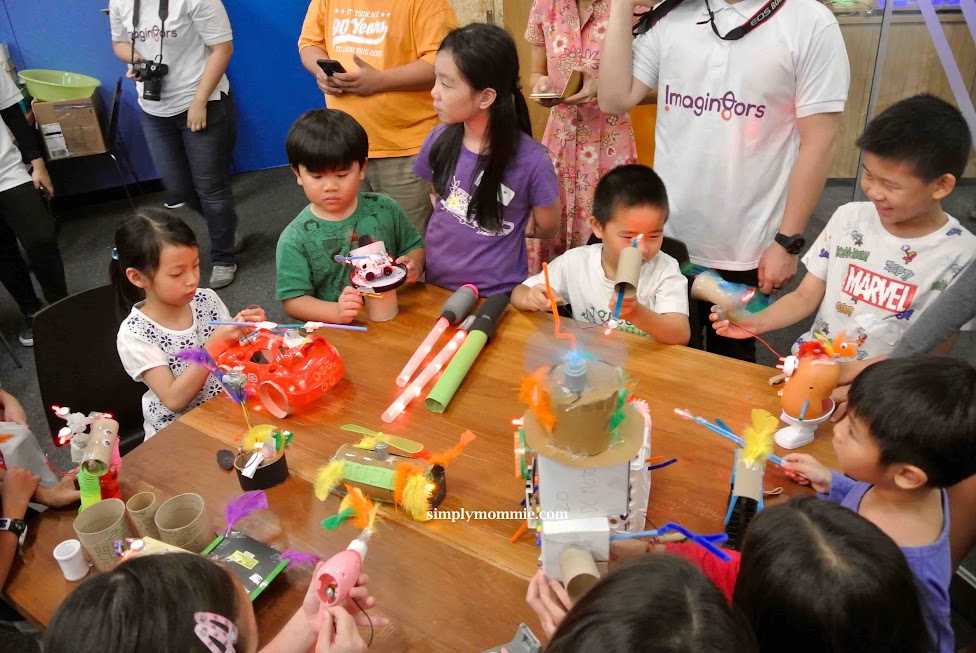
After everyone was done with their project, the kids gathered at one of the tables with their creation and it was really cool seeing everyone with their new toys!
Besides the workshop, there are other activities that you can do at the Tinker studio.

All-Day Activities

The Wind Table

Create a paper ‘helicopter’ and test out how it flies at the wind table!
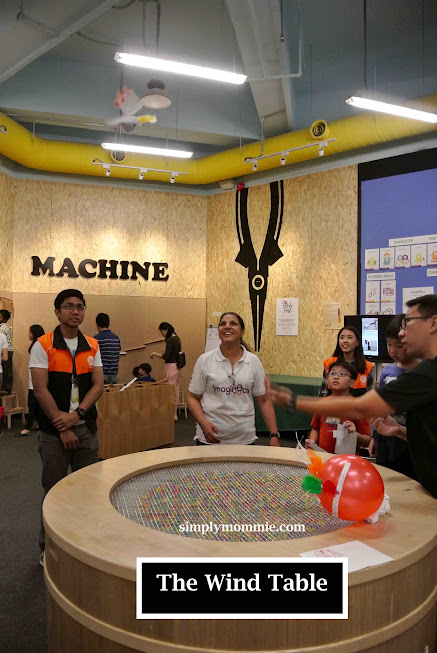
This looked easy but trust me, there is so much knowledge that goes into making one that can fly beautifully! Nevertheless, the kids and my hubby tried. Their creations didn’t fly very well, but it was all in good fun.

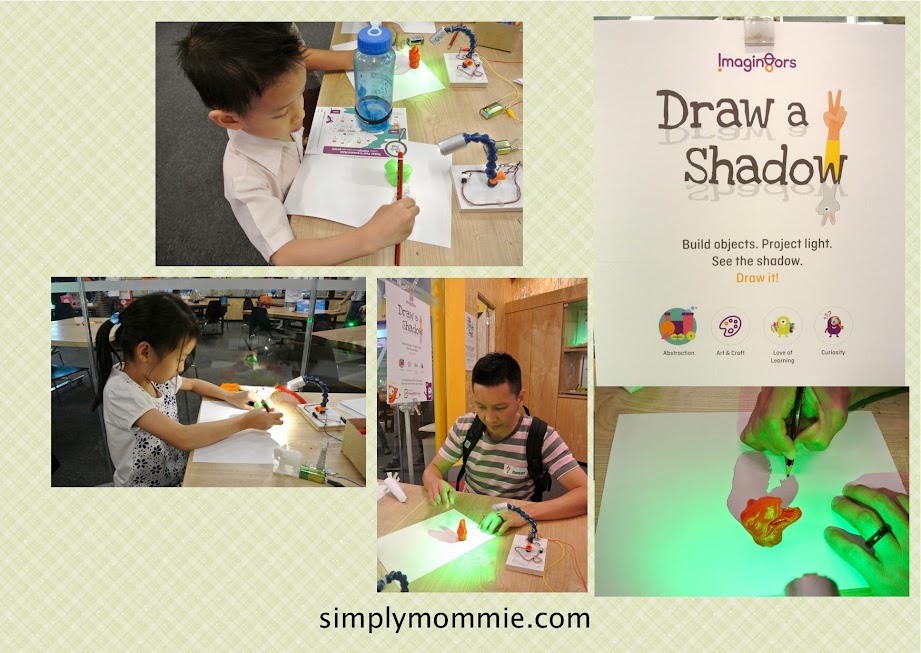
Draw a Shadow

We also checked out the “Draw a Shadow” booth where children get to learn shadow formation, shapes, and “Abstraction”.
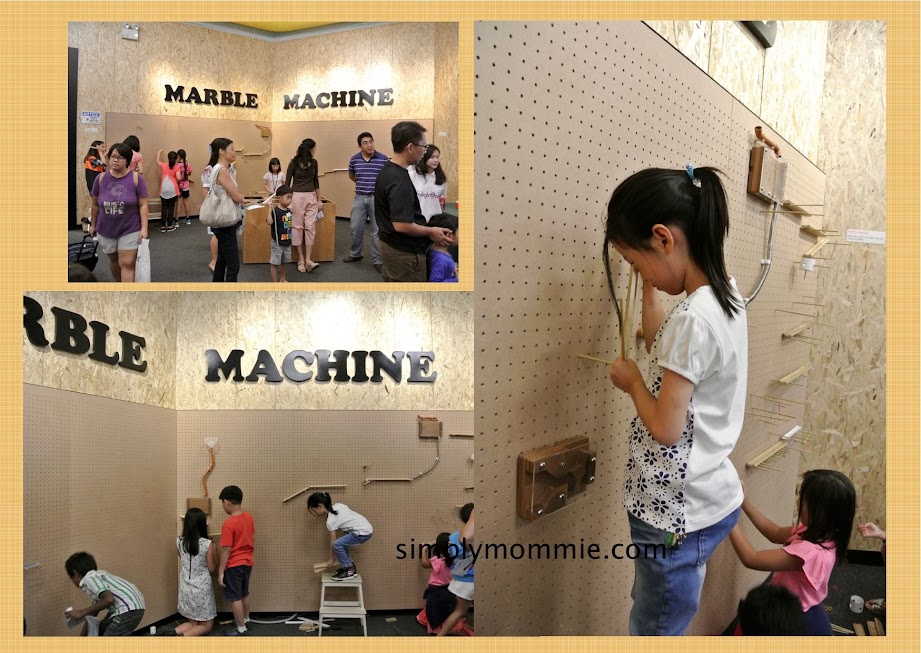
Marble machine wall

There’s also a marble machine wall which is always pretty crowded! My girl had a try at that:
After lunch, we checked out the relatively new show at Omni-Theatre – Dinosaurs at Dusk. It was pretty enjoyable and the kids liked it. You can check out the trailer here:

https://youtu.be/NIrzluDrtww

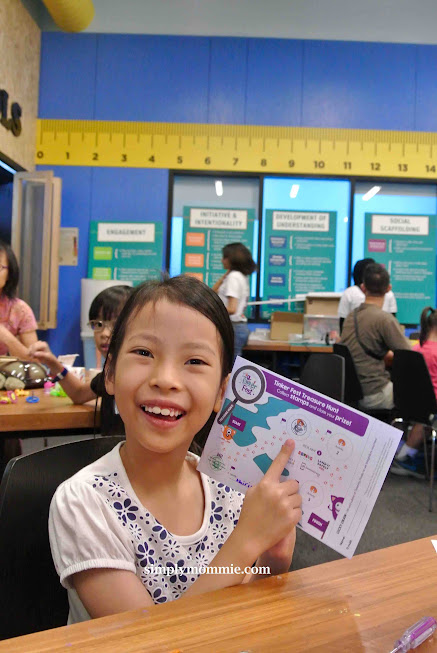
After the show, we headed back to the Science Centre. We continued with the Tinker Fest activities that we had not completed. There’s an activity card that you would collect upon first entering the Tinker Studio. Simply collect a stamp at each booth that you participated in and receive a cute badge when you complete the card.
Brush Bot Race

At this station, kids make brush bots and race them!
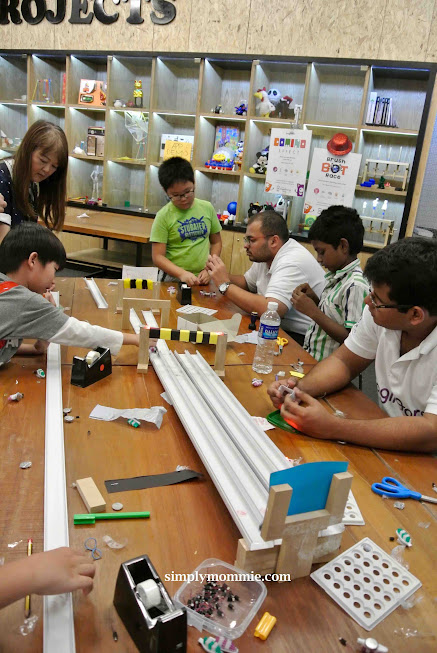
This is a winner with kids definitely. Here’s a video of an active brush bot:

First, my girl was taught how the brush bot works and how to make it and then it was time to race!
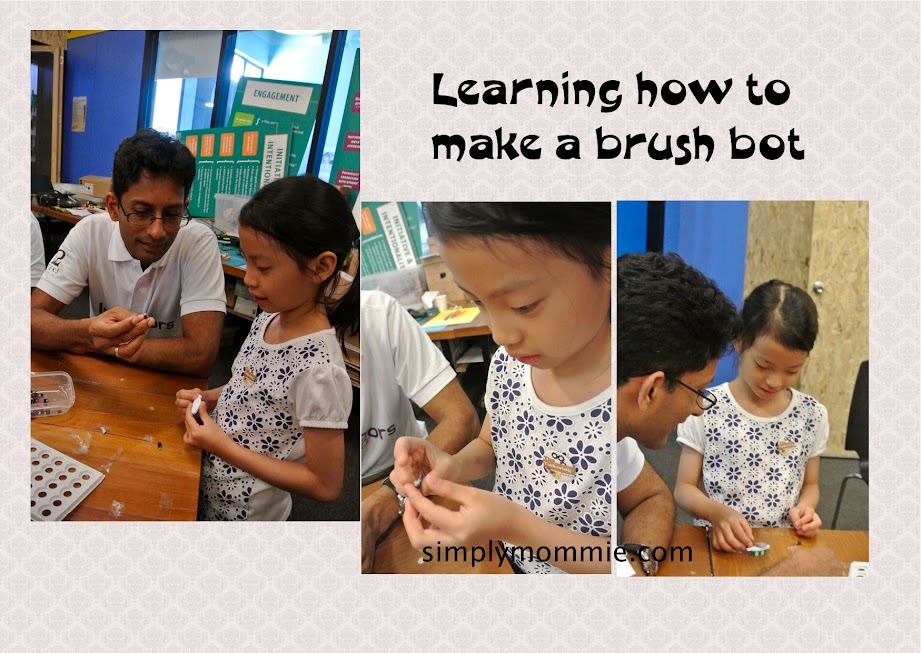
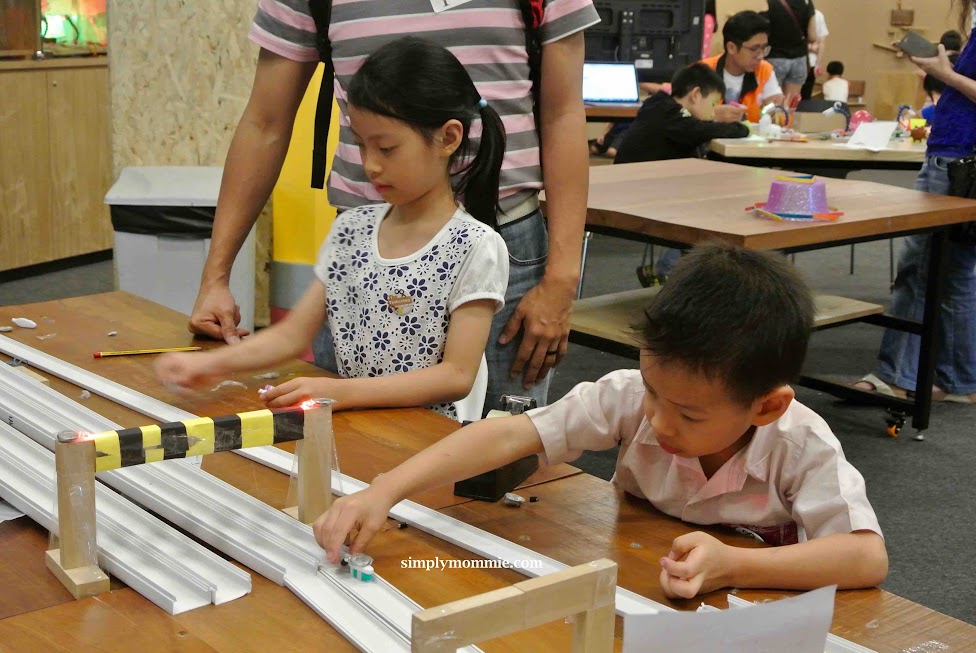
Domino Effect

Make your own dominos then line them up to watch the domino effect if you like!
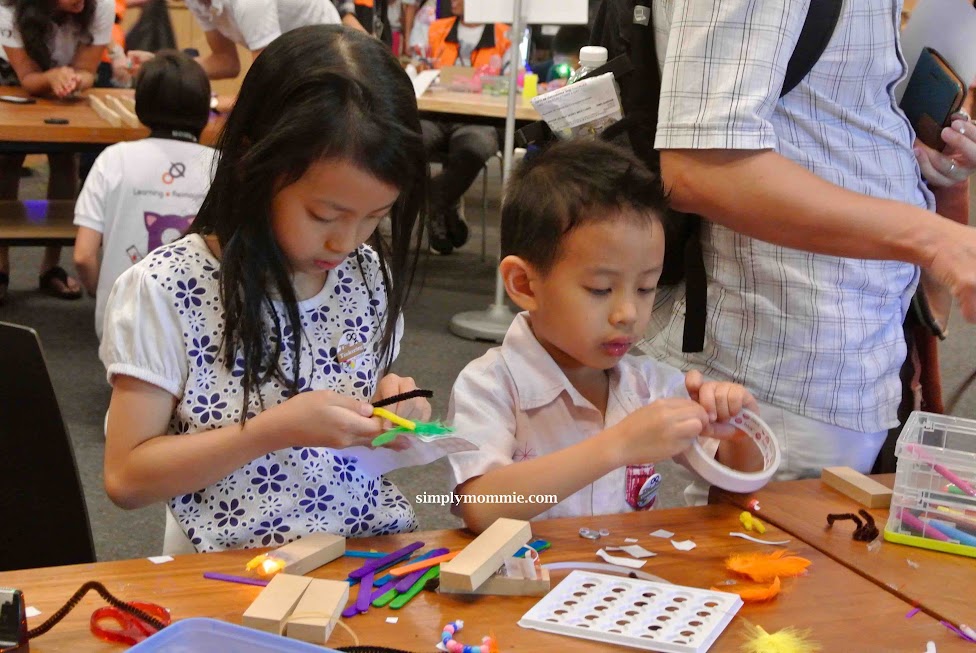
Besides the Tinker Fest, we also checked out the Fun Spot which is located near the live animals section.
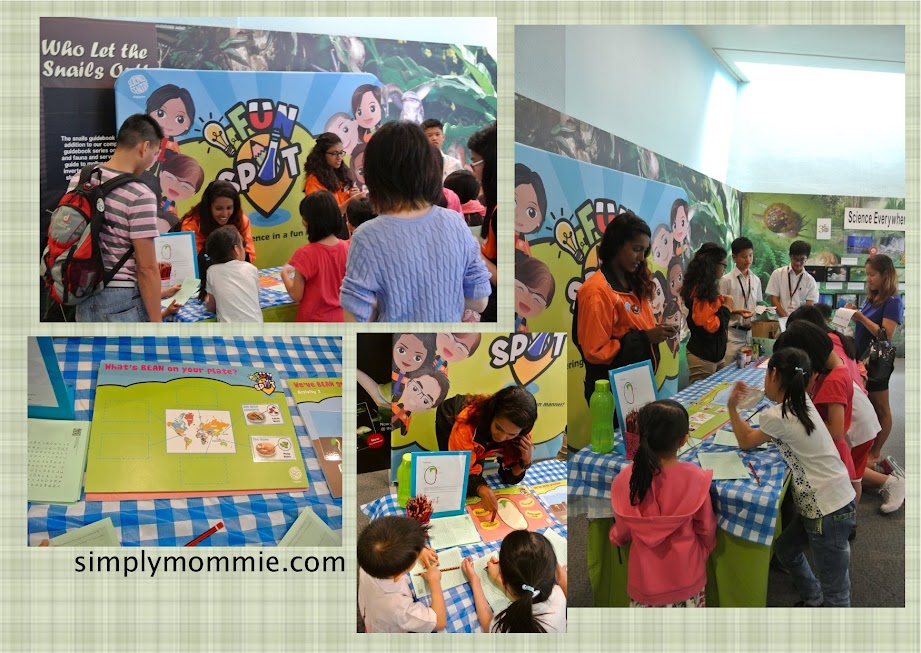
It was very informative for my girl. There she learnt about the life cycle of a bean seed and also discovered various bean dishes and their origins. It required too much writing to complete the handout so my little boy went off to check out the baby chick that just hatched.

Imagina8ors App Beta

Besides taking part in the Tinker Fest activities, you can download the Imagin8ors’ first app beta, available exclusively to a limited number of Tinker Fest participants from Sep 3. You can download it when you visit the booth at the Tinker studio where all the activities take place. The app features learning videos, activities and challenges, events, ideas and resources from Partners. Videos and activities etc. are curated based on what you have entered as your child’s interests so it is highly personalised for each child.

This app beta is currently available only for iPhone so it is difficult for me to show you more since I’m on android. But the android version will be out soon so I’ll probably show it to you then.

You can also read more at the Imagin8ors’ blog, Joy of Learning.

Tinker Fest

Dates: 3-11 Sep 2016
Timings: 10am – 6pm
Location: Tinkering Studio, Science Centre

There is no extra charge to attend Tinker Fest.

Disclosure: I was invited to check out the activities the Science Centre and its partners have to offer during September as part of the Science Centre Ambassador programme. No monetary compensation was received.
 

Posted in Places & Events, Reviews | Tagged | Leave a comment

National Library Board: Reading Programmes for Children 2016

This year I was totally blown away by the National Library Board reading programmes for children, so I thought I’d share the ones that really got my kids reading non-stop. Some of you might already know about these, but I love these programmes so much I just had to write about it!

Reading Programme I: Book Bugs

I was hanging out at the library borrowing books for the kids one afternoon and was actually on my way out when something caught my eye. I saw something about book bugs and that certainly stopped me in my tracks.

national library board reading programmes

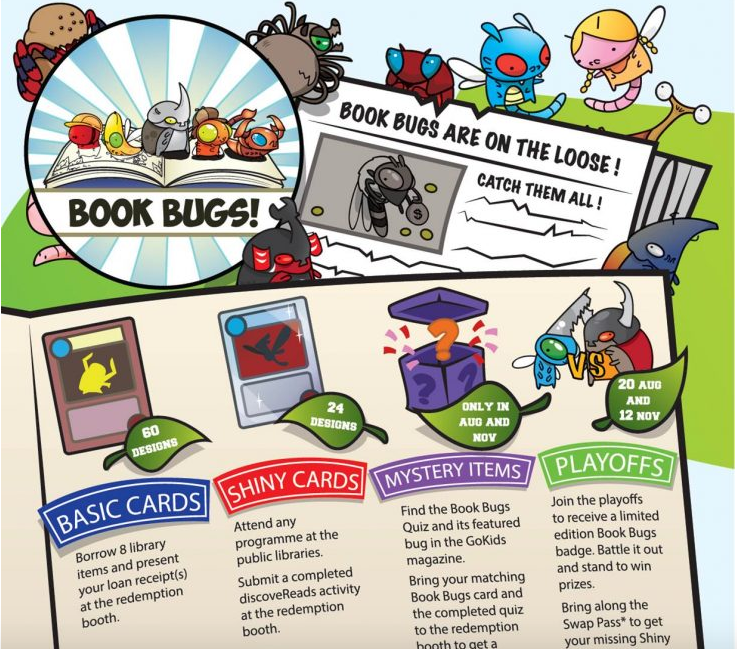
Screenshot taken from NLB’s website

That was at the start of August. Well, after I enquired with the librarian, I was told that the programme had started in June (and so I’ve sadly missed out on a couple of limited edition shiny cards from June and July), and will end at the end of the year. I was told to go online to find out more about the programme, which I did.

This reading programme kinda changed the reading patterns in my home. Most of the time, the kids used to take at least three weeks to finish the eight books I borrowed for them, and up to six weeks when the quota is increased by the library during holiday periods. With the desire to get their hands on these book bug cards, they have been religiously reading their books so that they can borrow another eight the next week.

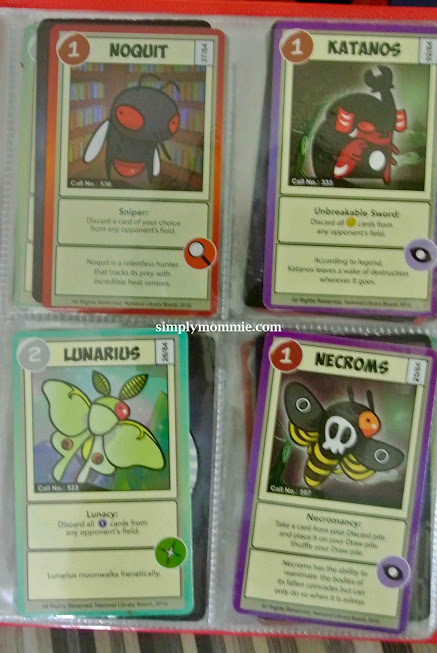
Here’s why. You need to get a receipt to show you have borrowed eight books in order to exchange for a pack of book bug cards. Each pack contains two cards and could be shiny, or not, depending on your luck. It is of course random and you can’t choose which bugs you want.

national library board reading programmes

normal cards

national library board reading programmes

Can you see that some of these are shiny cards?

There are also limited edition cards that I’ve mentioned. These limited edition shiny cards can only be redeemed by completing a DiscoveReads activity (e.g. designing book bug cards in August; click here for the September activity) or attending a library programme (such as storytelling sessions). There is a fixed schedule for the distribution of these special cards so check out the booth at the library during weekends to see which cards are available for redemption and how to get them. The book bug booth at the participating libraries is open during the opening hours of the library only during weekends, giving the children a week to complete the eight books. If you can finish the books earlier and borrow more during the week, you can do so as well as there is no limit on the number of receipts you collect during the week.

There are a total of 60 normal book bug cards and 24 shiny ones according to the library’s website (see the full list here). There is also a mystery item for redemption if you manage to collect the correct cards in order to answer the quiz questions. This mystery item is only available in August and November. Due to some unforeseen circumstances however, we will only be able to collect our mystery prize in mid-September so we are still waiting to find out what the mystery item is.

The kids have been so keen on these book bug cards that their actions have convinced me to get a game card book for them to store their prized cards. We haven’t really figured out how to play the game with these cards. And anyway, we haven’t accumulated enough cards to qualify for a game. The next playoff is on 12 November. By then, we should have collected sufficient cards for a game, but we’ll see if my girl will be interested in it.

There’s just so much pure delight in opening up a pack of cards to see which ones they got for the week – whether they already have those bugs, or it’s a repeated card, the kids love them anyway – and they don’t even know how to play the game yet! This initiative in my opinion has won hands down as the best library reading programme ever thus far! Kudos to the ones who came up with it and designed these adorable book bugs!

Reading Programme II: Reading Journals

If you haven’t already discovered these reading journals available for FREE at the library, you must definitely go get yourself a copy. There are reading journals for Primary 1-6. There are suggested reads in the form of a list on paper for secondary school students.

national library board reading programmes

There are four different journals for Primary 2. I suppose this should apply for the different levels for the primary school series.

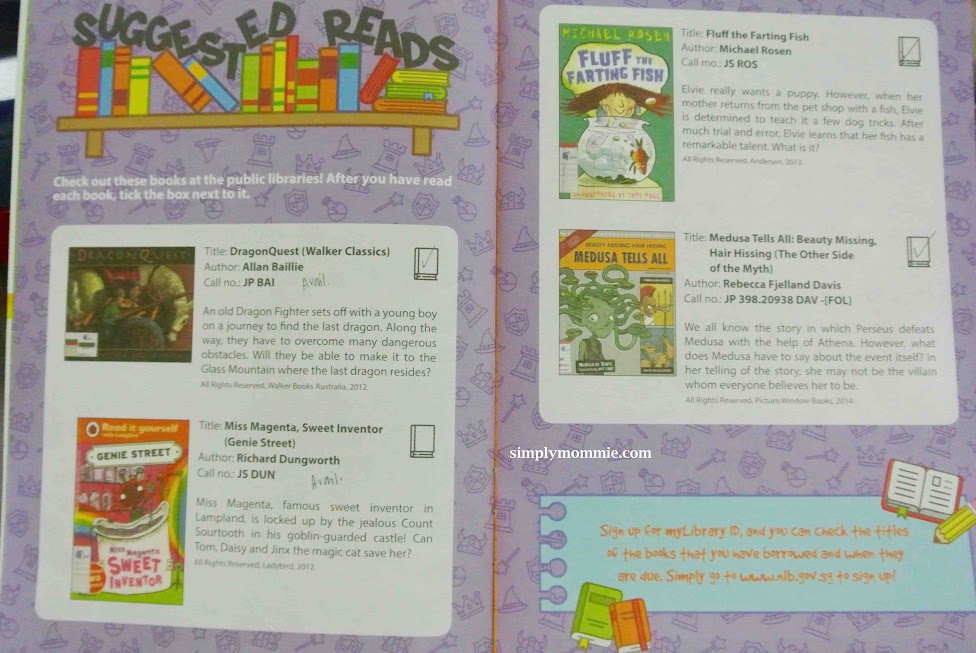
Earlier in the year, I obtained a list of suggested reads on a sheet of paper. That was also categorised for the different levels in primary school. After I misplaced that sheet of paper, I headed back to the library in July to get a new copy, only to be directed to these reading journals. Inside, there are various sections with 2-4 suggested books in each section. Those in the same section have something similar in general, and there is a follow-up activity after that on the next page. Call numbers and synopses are already provided so all you need to do is go to the shelf and pick up the book.

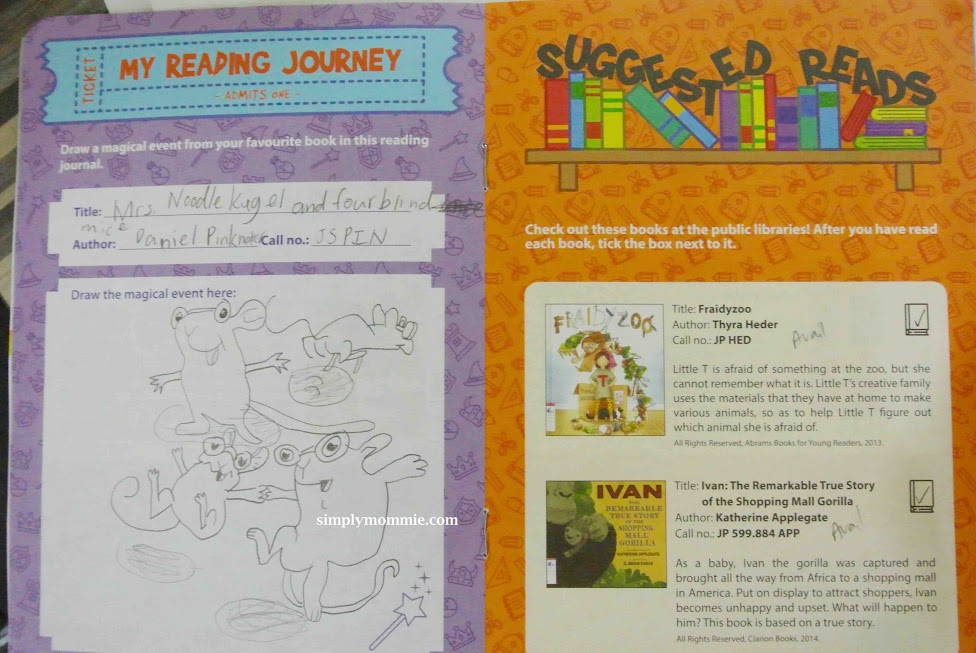
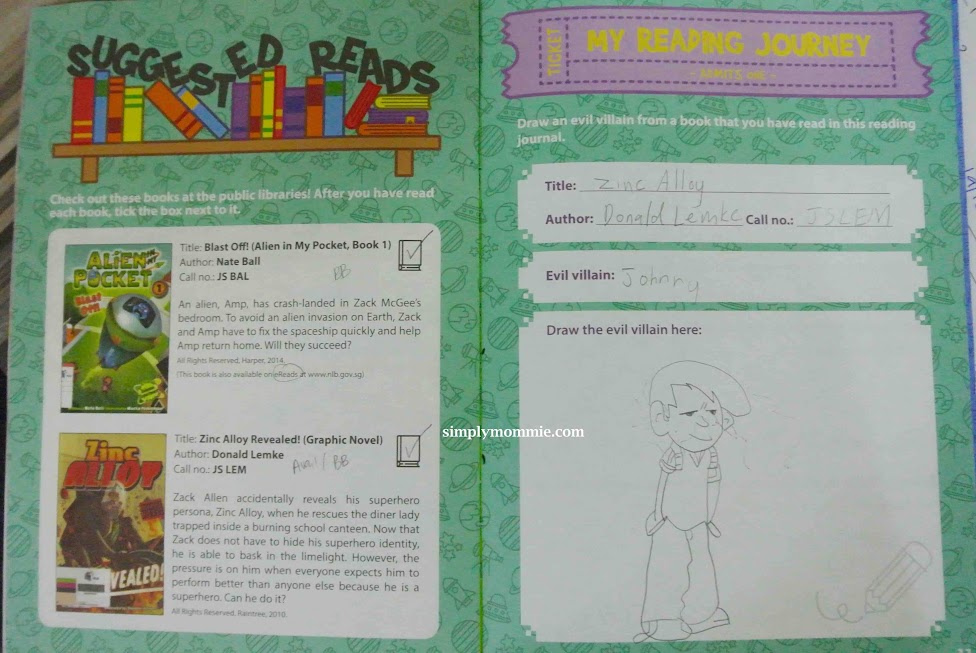
These are such gems! Besides the fact that we don’t need to crack our heads as to which books to borrow, these reading journals come with interesting follow-up activities. These are the book reviews that we used to do when we were children, but with twists and variety. No need to search for book reviews online when everything is provided already in the journal.

There are book reviews that encourage them to draw events, characters, character outfits etc. –

A twist to the usual drawing, here’s one that requires the children to sieve through for information about the character to find out the age. Children are also acquainted with authors’ names and call numbers.

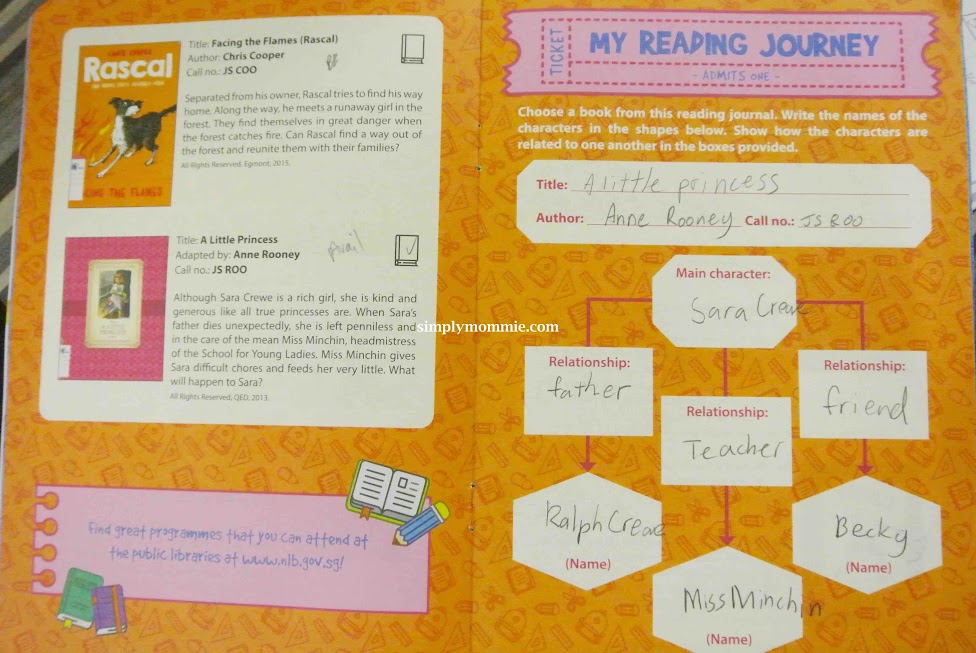
This activity requires them to be clear about how the characters are interlinked in the story:

There are plenty of activities in the journals and I can’t possibly show them all here. Besides the book-related activities, there is also a last activity at the end of each journal. This one below encourages the children to go to a regional library to check out the TumbleBook kiosk. Another asks the children to find out more about a country they would like to visit and write down two interesting facts about the country they discovered in research. I think the ones that required her to staple in the book loan receipts for the month and the library activity she attended were the easiest to complete! 😀

Stocks might be running low for these reading journals, but you should really try your luck if you haven’t already got these. We actually got two out of the four journals from her form teacher in July and I initially thought those were from the school, only to realise after visiting the library that this is a National Library Board reading programme.

If you can’t get your hands on these, you can also check out this link from the NLB where you can find suggested reads for different age groups as well as for different languages. The list is way shorter than the reading journals I’ve shared with you here, but well, it’s a start.

We’re more than halfway through the suggested books and she can’t wait to complete the reading list! 😀

Disclosure: I am sharing the National Library Board reading programmes because I think these are fabulous initiatives. I was in no way compensated to write this post.

~~~~~~~~~~~~

Lovely and constructive comments are welcomed. Do hop over to my Facebook page where I connect with my readers and I would love to have you following me on Pinterest, Twitter and Instagram too 🙂

Posted in Places & Events, Reviews | Tagged | 10 Comments